A New Valve Without Open-Heart Surgery — All About TAVI
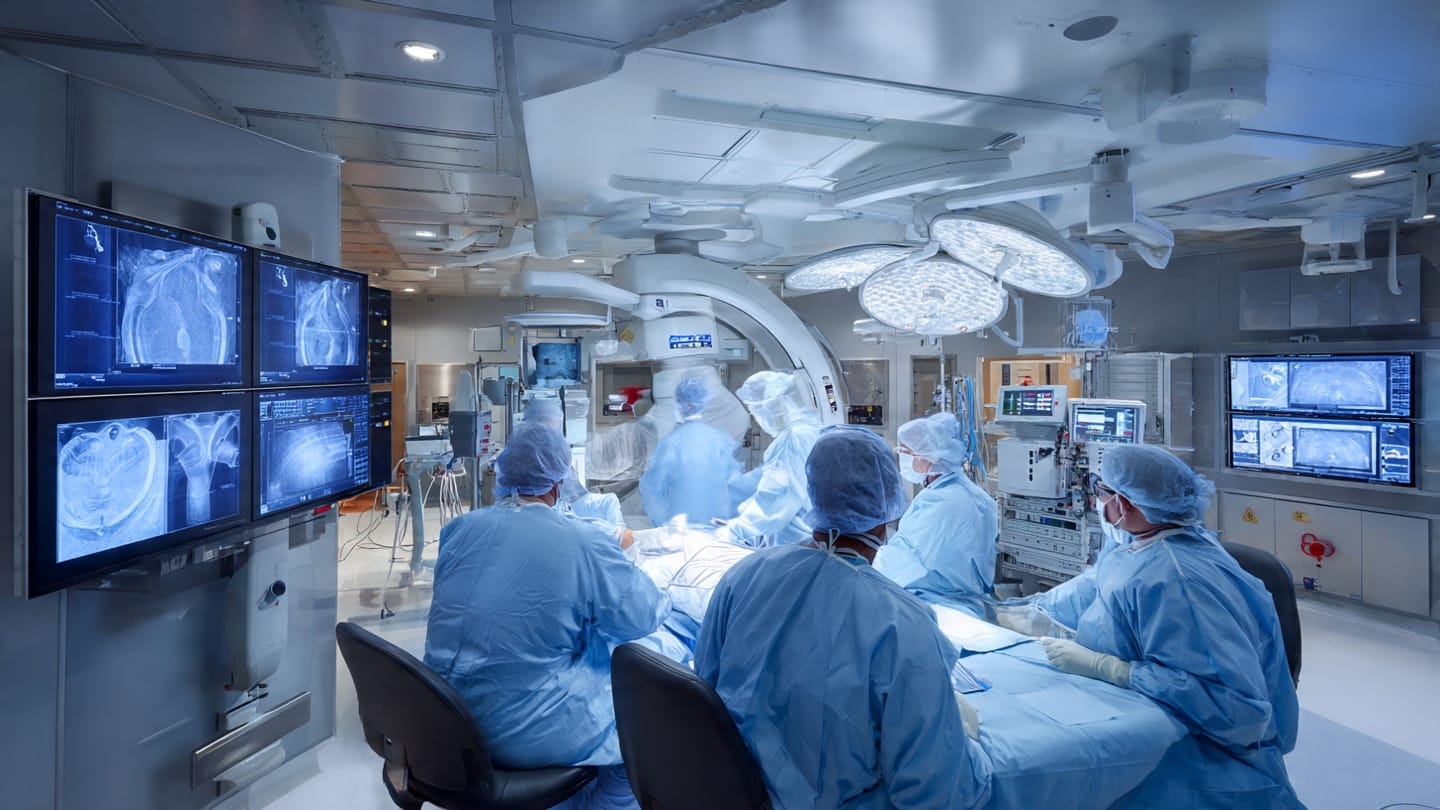
For patients with a severely diseased aortic valve who are too frail or too high-risk for conventional open-heart surgery, medical science has delivered a remarkable solution. Transcatheter Aortic Valve Implantation — TAVI (also known as TAVR — Transcatheter Aortic Valve Replacement) — is a minimally invasive procedure that replaces a failing heart valve without requiring the chest to be opened. Since its introduction, TAVI has transformed the treatment of aortic stenosis, offering thousands of patients — many elderly and with multiple health conditions — a second chance at a functional, symptom-free life.
Understanding Aortic Stenosis
The aortic valve is one of the four valves of the heart. It sits between the left ventricle — the heart's main pumping chamber — and the aorta, the body's largest artery. Its job is to open wide with each heartbeat to allow blood to flow out, then close tightly to prevent it from flowing back.
Aortic stenosis is the progressive narrowing of this valve, most commonly due to calcium deposits building up on its leaflets over decades — a degenerative process strongly associated with ageing. As the valve opening narrows, the heart must work harder to push blood through, eventually causing the left ventricle to thicken and weaken. Untreated severe symptomatic aortic stenosis carries a very poor prognosis — a median survival of less than two years without intervention.
Symptoms of Severe Aortic Stenosis
• Chest pain or tightness (angina) on exertion
• Breathlessness — initially on exertion, later at rest
• Dizziness or blackouts (syncope) — often on exertion
• Fatigue and reduced exercise tolerance
• Ankle swelling, Orthopnoea
Heart failure symptoms —The onset of symptoms marks a critical turning point — once symptomatic, the disease progresses rapidly without treatment.
Traditional Treatment — Surgical Aortic Valve Replacement (SAVR)
For decades, open surgical aortic valve replacement (SAVR) was the only definitive treatment. The procedure requires a median sternotomy (splitting the breastbone), cardiopulmonary bypass (the heart-lung machine), and a recovery of weeks to months. It carries excellent outcomes in fit patients — but carries significantly higher risk in elderly patients with multiple comorbidities (heart failure, kidney disease, COPD, prior cardiac surgery), for whom surgery may be deemed too high-risk or prohibitive.
What Is TAVI?
TAVI is a catheter-based procedure in which a new, prosthetic heart valve — mounted on a metal stent — is delivered to the aortic valve position through a catheter (a thin, flexible tube), without opening the chest. The diseased native valve is not removed; instead, the new valve is expanded within it, pushing the calcified leaflets aside and immediately functioning in their place.
How Is TAVI Performed?
The procedure is typically performed under general anaesthesia or conscious sedation in a specialised cardiac catheterisation laboratory (hybrid cath lab), by a multidisciplinary Heart Team comprising interventional cardiologists and cardiac surgeons:
• the most common and preferred access route; the catheter is introduced through a small puncture in the femoral artery in the groin — no chest incision required Transfemoral approach —
• subclavian, transaortic, or transapical approaches are used when the femoral arteries are not suitable Alternative access routes —Once the catheter is positioned across the aortic valve under fluoroscopic (X-ray) and echocardiographic guidance, the new valve is deployed — either by balloon expansion or self-expansion, depending on the valve design. The entire procedure typically takes 60–90 minutes.
Types of TAVI Valves
• deployed by inflating a balloon to expand the valve into position Balloon-expandable valves (e.g., SAPIEN series)
• the stent expands on its own once released from the delivery catheter Self-expanding valves (e.g., CoreValve, Evolut series)
Who Is TAVI Suitable For?
Originally developed for patients deemed too high-risk for surgery, TAVI is now approved and recommended for patients across all surgical risk categories — high, intermediate, and increasingly, low surgical risk — as evidence from landmark trials (PARTNER, CoreValve, Evolut) continues to show excellent outcomes:
• Elderly patients (typically over 75) with severe symptomatic aortic stenosis
• heart failure, COPD, previous cardiac surgery, severe obesity, or frailty Patients with significant comorbidities —
• where TAVI offers equivalent or superior outcomes to surgery for appropriately selected candidates Intermediate and low surgical risk patients —The decision is made by a multidisciplinary Heart Team following comprehensive assessment of anatomy (CT scan), cardiac function, comorbidities, and patient preference.
Outcomes and Recovery
• Procedural success rates exceed 95% in experienced centres
• Most patients are mobilised the day after the procedure
• Hospital stay — typically 2–5 days
• Return to normal activity — within 1–2 weeks for most patients
• Significant improvement in symptoms and quality of life is typically evident within days to weeks
• Comparable or superior durability to surgical valves in medium-term follow-up studies
Risks and Complications
TAVI is a major cardiac procedure and carries risks, particularly in elderly, high-risk patients: a major concern; minimised by careful technique and embolic protection devices
Stroke — in 10–25% of cases; the new valve may affect the heart's electrical conduction system Permanent pacemaker requirement —a minor leak around the new valve; usually mild and not clinically significant
Paravalvular leak — bleeding or injury at the femoral artery access site
Vascular access complications - Acute kidney injury. if the TAVI valve deteriorates over years, a second TAVI can often be performed within the first prosthesis
TAVI at Believers Hospital, Thiruvalla
At Believers Hospital Thiruvalla, the Believers International Heart Centre is equipped to evaluate and manage complex structural heart disease including severe aortic stenosis. Our multidisciplinary Heart Team — comprising interventional cardiologists, cardiac surgeons, imaging specialists, and cardiac anaesthesiologists — collaborates to provide the most appropriate treatment for each patient, whether TAVI, conventional surgical valve replacement, or medical management. Advanced cardiac CT, echocardiography, and a state-of-the-art hybrid catheterisation laboratory support our structural heart programme. If you or a loved one have been told you have a heart valve problem — or are experiencing unexplained breathlessness or chest discomfort — please seek specialist evaluation.
???? 0469 270 3100 | 0469 350 3100 ???? www.bcmch.org