Proning: The Life-Saving Position You May Never Have Heard Of
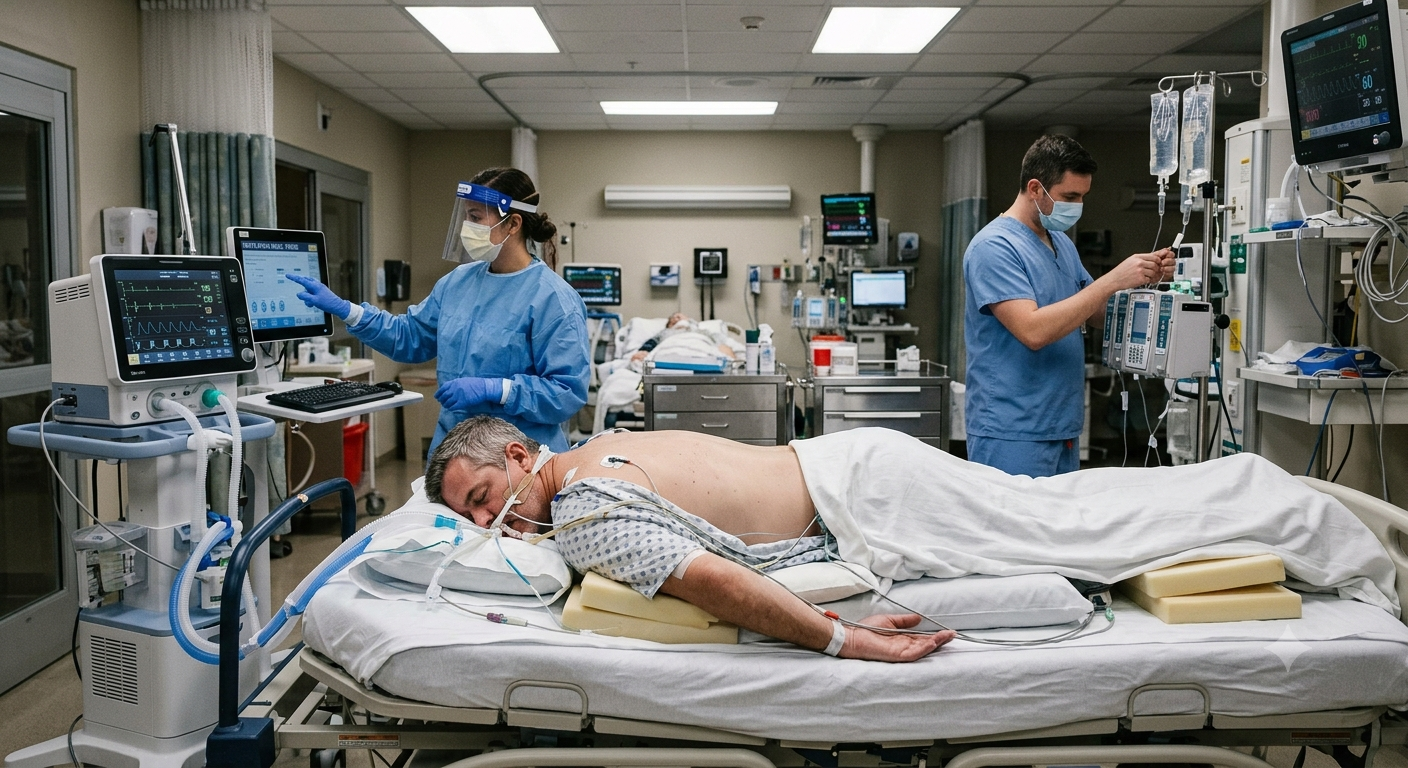
If you’ve ever visited a loved one in the intensive care unit and found them lying face-down—surrounded by monitors, ventilators, and intravenous lines—you may have been confused or alarmed by what you saw. This carefully controlled position is known as proning, and it has helped save countless lives across the globe.
Although the term gained widespread attention during the COVID-19 pandemic, proning is far from a new innovation. Critical care specialists have utilised this technique for decades to manage severe respiratory failure, and the clinical evidence underpinning its use continues to strengthen.
What Is Proning?
Proning refers to the medical practice of turning a patient from a supine position (lying on the back) to a prone position (lying face-down on the stomach).It is most frequently employed for patients on mechanical ventilation who are experiencing critically low oxygen levels.Proning is not a standalone cure; rather, it is a carefully timed adjunct therapy used in combination with ventilation and other intensive care measures.The manoeuvre requires a coordinated, multidisciplinary team to ensure patient safety throughout the process.
Why Does Proning Work?
The effectiveness of proning is rooted in human anatomy—particularly in the asymmetrical structure of the lungs. A greater volume of lung tissue is located toward the back of the chest than at the front. When a critically ill patient lies on their back, fluid accumulation in the lungs compresses the alveoli (air sacs), hindering adequate air intake. The weight of the heart and abdominal organs further compounds this compression.Turning the patient face-down shifts this weight away from the lungs, allowing the larger posterior lung regions to expand.Importantly, the back of the lungs also enjoys a richer blood supply. When these areas are open and ventilated, oxygen enters the bloodstream far more effectively—a principle clinicians refer to as improved ventilation-perfusion matching.
What Conditions Does Proning Treat?
Proning is primarily indicated for patients with severe respiratory distress and significant hypoxia (low blood oxygen).
-
Acute Respiratory Distress Syndrome (ARDS): This is the most common reason for proning. ARDS causes fluid to build up in the alveoli, making breathing perilously difficult. It frequently arises as a complication of pneumonia, sepsis, or severe COVID-19.
-
Severe COVID-19: Research has repeatedly demonstrated that prone positioning reduces mortality and lowers the need for mechanical ventilation in hospitalised patients with COVID-19.
-
Severe pneumonia and other critical respiratory failure states may also benefit.
How Is Proning Performed?
In the ICU, proning is a precision procedure carried out by a team—typically two to three providers on either side of the bed, with a respiratory therapist leading at the head.
-
Before any movement, all tubes, intravenous lines, and monitoring leads are carefully secured.
-
The patient is gently rolled onto their side and then carefully turned face-down onto pre-positioned pillows.
-
A pillow is placed under the head and neck to preserve proper spinal alignment.
-
After repositioning, monitoring leads are reattached and every line is verified to be secure and functioning.
While protocols and equipment may vary between hospitals, the core objective remains consistent: a safe, synchronised turn that minimises any risk to the patient.
How Long Does a Proning Session Last?
-
Improvements in oxygenation can often be observed within just one hour.
-
Typically, a patient remains prone for 12 to 18 hours per session.
-
·Clinical guidelines, reinforced by landmark studies such as the PROSEVA trial (2013), recommend at least 16 hours of proning per session for maximum benefit.
-
Between sessions, the patient is returned to the supine position for a rest period, and the cycle is repeated if clinically indicated.
What Are the Benefits?
In addition to enhancing oxygenation, proning offers other significant physiological advantages:
-
It helps dilate pulmonary blood vessels, reducing the workload on the heart.
-
It promotes more effective drainage of mucus from the airways.
-
It may reduce the overall duration of mechanical ventilation.
-
Most notably, it has been shown to significantly lower mortality in moderate-to-severe ARDS—a finding that is robustly supported by critical care evidence.
Are There Any Risks?
When performed by an experienced team following a structured protocol, proning is generally safe. However, as with any ICU procedure, potential risks include:
-
Accidental displacement of the breathing tube (endotracheal tube) or intravenous catheters
-
Temporary fluctuations in blood pressure or heart rhythm (haemodynamic instability).
-
Brief drops in oxygen saturation during the turning process.
-
Pressure injuries to the skin, particularly on the face, chest, or knees.
These risks are substantially reduced in centres with skilled teams and established proning protocols.
What Is Awake Proning?
Not every patient who benefits from proning is on a ventilator. In milder cases, clinicians may recommend awake proning—where a conscious patient is guided into the prone position themselves.
-
This approach is used for patients with moderate respiratory illness who require supplemental oxygen but have not yet been intubated.
-
Awake proning can enhance breathing and, in some instances, may entirely prevent the need for mechanical ventilation.
-
It can be carried out in a hospital bed, with the care team providing continuous monitoring and support.
Critical Care at Believers Hospital, Thiruvalla
Seeing a loved one in the ICU, lying face-down and connected to an array of tubes and monitors, can be deeply distressing. Understanding that proning is a deliberate, evidence-based intervention—and one that can be truly life-saving—may offer a measure of comfort during a difficult time.
At the Department of Critical Care, Believers Hospital, Thiruvalla, proning is just one of many advanced respiratory therapies delivered by our expert team. Our ICU is the largest single-unit facility in Central Travancore and the region’s first ECMO Centre. Featuring 42 level-3 ICU beds, dedicated isolation rooms, and a 26-bed High Dependency Unit (HDU), we provide around-the-clock care for critically ill patients. Our dedicated specialists—including consultant intensivists, respiratory therapists, and critical care nurses—ensure that every patient receives the highest standard of personalised, compassionate care.
To learn more about our Critical Care services at Believers Hospital, visit:
https://www.bcmch.org/higher-specialities/critical-care