Monitoring Your Blood Pressure at Home: A Small Step That Could Save Your Life
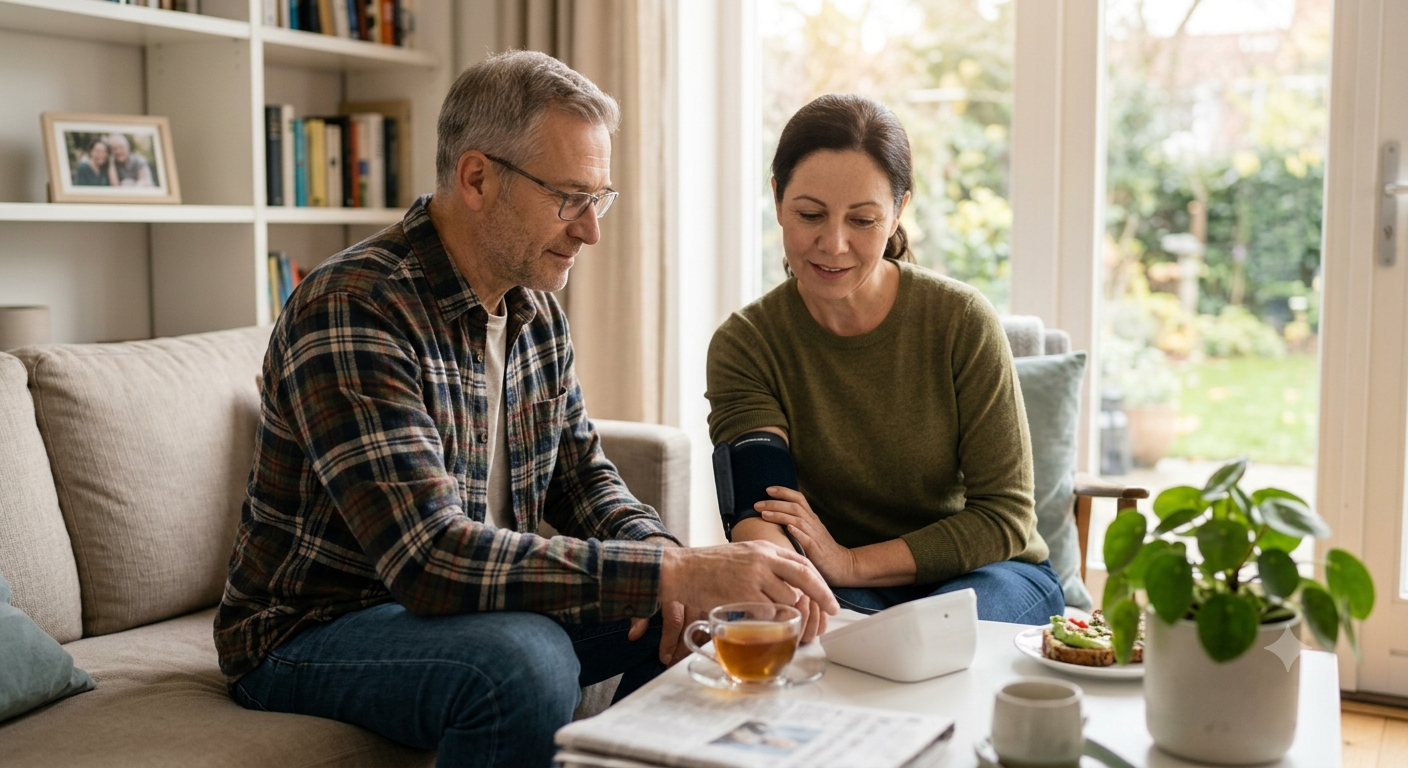
High blood pressure—or hypertension—is often dubbed the "silent killer." It rarely produces warning signs, yet if left unchecked, it significantly increases the risk of heart attack, stroke, kidney disease, and heart failure. One of the most practical and powerful tools for managing this condition is something you can do right from your own home: regularly checking your blood pressure.
Leading health organisations—including the American Heart Association, the American Medical Association, and cardiology experts worldwide—now strongly recommend self-measured blood pressure (SMBP) monitoring as a key part of hypertension care. Research shows it can meaningfully reduce cardiovascular risk, and it's easier than most people realise.
Why Home Monitoring Matters
A single blood pressure reading taken at the clinic can be misleading. Anxiety, rushing to your appointment, or even just being in a medical setting can temporarily push your numbers up—a well-known effect called white coat hypertension. On the flip side, some people have normal readings at the clinic but higher levels during daily life, a condition known as masked hypertension.
Home monitoring helps overcome both issues. By taking readings in a relaxed, familiar setting over several days, you and your doctor gain a much clearer picture of your true blood pressure patterns. This leads to more accurate treatment decisions, fewer unnecessary medication changes, and greater peace of mind.
Who Should Monitor at Home?
Home blood pressure monitoring is recommended for:
-
Anyone diagnosed with hypertension or pre-hypertension
-
People with diabetes, chronic kidney disease, or heart disease—conditions often linked with high blood pressure
-
Those starting, changing, or adjusting blood pressure medications, to gauge treatment effectiveness
-
Pregnant women being monitored for gestational hypertension or pre-eclampsia
-
Older adults, whose blood pressure tends to fluctuate more
-
Anyone with a family history of hypertension or cardiovascular disease
If you're unsure whether home monitoring is right for you, speak with your doctor. They can guide you on whether to start and help you interpret your results.
Choosing the Right Monitor
Not all blood pressure devices are created equal. When selecting one, keep these points in mind:
-
Upper arm monitors are consistently more accurate than wrist devices and are widely recommended by cardiologists and the American Heart Association.
-
Choose a validated, automatic (digital) device that has been clinically tested for accuracy. The British and Irish Hypertension Society provides a list of approved monitors.
-
Cuff size matters greatly. A cuff that's too small can give falsely high readings; one too large can give falsely low readings. Measure your upper arm circumference and choose the right cuff size before buying.
-
Look for a monitor with a clear display, memory storage for multiple readings, and ideally, the ability to sync with a smartphone app for easy tracking.
Once you've purchased your monitor, bring it to your next doctor's appointment. Ask your healthcare team to compare its readings with those taken on their clinical device to confirm it's working correctly.
How to Measure Blood Pressure Correctly
Proper technique is essential. Even the best monitor will give unreliable results if used incorrectly. Follow these steps every time:
-
Avoid caffeine, tobacco, alcohol, and vigorous exercise for at least 30 minutes beforehand.
-
Empty your bladder first—a full bladder can slightly raise your reading.
-
Sit quietly for five minutes before measuring. Use a straight-backed chair with your feet flat on the floor, legs uncrossed, and back supported.
-
Rest your arm on a table at heart level. Use a cushion underneath if needed to achieve the correct height.
-
Place the cuff on bare skin—not over clothing. A rolled-up sleeve that constricts your arm will affect the result.
-
Stay still and don't talk during the measurement.
-
Take two or three readings, one to two minutes apart, and record all of them. Many devices calculate an average automatically.
-
Measure at the same time each day—ideally in the morning before taking medication, and again in the evening.
Always use the same arm for consistency. Over time, you or your doctor may notice patterns—such as higher morning readings—that can inform treatment choices.
Understanding Your Numbers
Blood pressure is recorded as two figures: systolic (the top number, when your heart beats) over diastolic (the bottom number, when your heart rests between beats). The unit is millimetres of mercury, written as mmHg.
-
Optimal: below 120/80 mmHg
-
Normal: 120–129 / below 80 mmHg
-
Elevated (pre-hypertension): 130–139 / 80–89 mmHg
-
Stage 1 Hypertension: 140–159 / 90–99 mmHg
-
Stage 2 Hypertension: 160 or above / 100 or above mmHg
-
Hypertensive crisis (seek immediate help): above 180 / above 120 mmHg
A single high reading doesn't necessarily mean you have hypertension. Your doctor will look at the overall pattern over several days or weeks before making a diagnosis or adjusting your treatment.
Common Mistakes to Avoid
-
Taking readings immediately after waking up—give yourself time to start your day first.
-
Measuring after physical activity, stress, or a meal—wait at least 30 minutes.
-
Using the wrong cuff size or placing the cuff over clothing.
-
Talking or moving during the measurement.
-
Recording only occasional readings and missing daily trends.
-
Stopping medication based on home readings without consulting your doctor—always seek professional advice before making changes.
Long-Term Benefits of Home Monitoring
The evidence behind home blood pressure monitoring is strong. Studies in leading heart journals consistently show that people who monitor at home achieve better blood pressure control, experience fewer cardiovascular events, and need fewer clinic visits over time. It empowers you to take an active role in your health—and that engagement often improves adherence to medication and lifestyle changes.
If your readings are consistently within target range, your doctor may allow you to reduce clinic visits. Conversely, if readings remain high, early detection through home monitoring means treatment can be adjusted before complications arise.
Cardiovascular Care at Believers Hospital Thiruvalla
At Believers Hospital Thiruvalla, the Department of Cardiology and the Believers International Heart Centre provide world-class care for hypertension, heart disease, and all cardiovascular conditions. Our team of consultant cardiologists collaborates closely with specialists in nephrology, endocrinology, and internal medicine to offer integrated, patient-focused blood pressure management.
Whether you've recently been diagnosed with hypertension, are struggling to reach your target despite medication, or simply want to better understand your heart health, our team is here to support you. We offer comprehensive blood pressure assessment, 24-hour ambulatory blood pressure monitoring (ABPM), cardiac investigations, and personalised treatment plans tailored to your needs.
Don't wait for a crisis to seek care. Take the first step today.